मूलाधार
Muladhara
396hz
Root Chakra
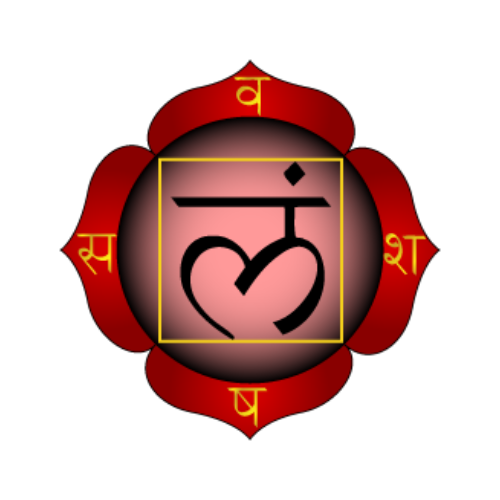
Colour: Red
Shape: Square
Mandala: Four-petaled lotus
Frequency (in Hertz): 396 Hz
Relevant Organ: Adrenal glands
Beeja Mantra: Lam (लं)
Element: Earth
Platonic Solid/Geometric Form: Hexahedron 🧊
Classical Imagery: Serpent coiled around the base of
the spine.
The Root Chakra represents our foundation, stability, and
sense of security. It is associated with our basic survival
needs and our connection to the physical world.
Muladhara chakra is the foundational energy center of the body, often symbolized by a red four-petaled lotus. This chakra is located at the base of the spine, near
the perineum, and is associated with the earth element, grounding, survival, and basic instincts. It is considered the root of the body’s energy system and the
starting point for the awakening of Kundalini energy. To awaken the Muladhara chakra, Swami Satyananda Saraswati describes several methods and practices. These
practices are designed to stimulate and activate the Muladhara, leading to the awakening of the dormant Kundalini energy. Here are the key steps according to his
teachings:
- Asana Practice
Asanas(yogic postures) are foundational for awakening Muladhara. These postures help to ground the energy, stabilize the body, and prepare the system for higher
spiritual practices. Recommended asanas:
Padmasana (Lotus Pose) or Sukhasana (Easy Pose) to encourage stability and grounding.
Vajrasana (Thunderbolt Pose) to activate the pelvic region.
Bhujangasana (Cobra Pose) to open the lower spine.
Matsyasana (Fish Pose) to activate the base of the spine.
The purpose of these poses is to increase awareness of the base of the spine and to create a steady foundation for meditation. - Pranayama
Pranayama is essential for awakening the Muladhara chakra. Through breath control, one can influence the flow of prana (life energy) throughout the body and
direct it toward the root chakra.
Kapalbhati (Breath of Fire): This practice stimulates the lower energy centers and strengthens the nervous system, helping to raise energy from the base of the
spine.
Anulom Vilom (Alternate Nostril Breathing): This pranayama helps to balance the energy flow in the body and harmonize the left and right sides, creating an
energetic foundation for further practices.
Bhastrika (Bellows Breath): This can awaken dormant energy at the base of the spine and increase prana flow in the body. - Bandhas (Body Locks)
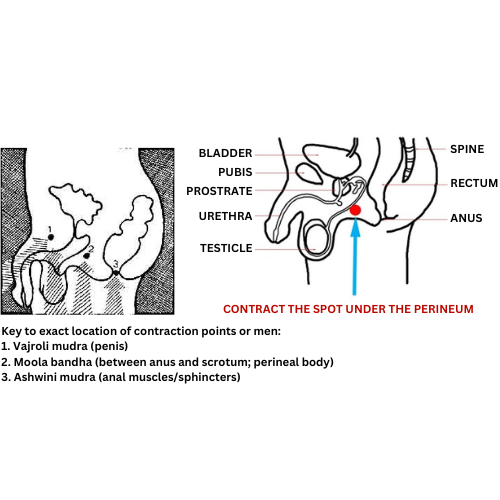
The use of bandhas (body locks) helps to concentrate energy and direct it toward the Muladhara chakra. The primary bandha for this purpose is Mula Bandha. Mula
Bandha involves contracting the muscles of the pelvic floor, the perineum, and the anus. This action helps to activate the energy in the Muladhara and stabilize the
root chakra. Practicing Mula Bandha regularly, especially while sitting in meditation or during pranayama, strengthens the root and prepares the body to receive the
rising Kundalini energy. - Visualization
Swami Satyananda suggests using visualization techniques to focus the mind on the Muladhara chakra. This can be done by imagining a red, four-petaled lotus at the
base of the spine, or by visualizing a glowing red sphere of energy in that area.
Visualization of a square: The Muladhara chakra is associated with a square shape, so visualizing a red square with four corners at the base of the spine can also aid
in concentrating energy in this area. The idea is to hold this image during meditation to focus the mind and awaken the latent energy stored in the root chakra. - Mantra Chanting
The Bija Mantra for the Muladhara chakra is “Lam” (pronounced as “l-ah-m”). Repeating this sound (either silently or out loud) helps to tune into the energy of the
Muladhara and activate its power. Chanting this mantra with focused intent while meditating on the base of the spine can help to awaken and balance the
Muladhara chakra. - Grounding Techniques
Muladhara is deeply connected to the earth element, so grounding practices are vital for stimulating this chakra. Swami Satyananda encourages spending time in
nature, walking barefoot on the earth, or even practicing mindfulness while seated on the ground. This helps to establish a strong connection to the earth and
reinforces the stability and security associated with the Muladhara. Also, practices like Savasana (Corpse Pose) with full awareness of the body on the ground can be
effective in grounding the energy. - Diet and Lifestyle
A balanced diet and a simple lifestyle are essential for maintaining a stable Muladhara chakra. Since this chakra governs survival and basic needs, maintaining a
physical and mental state of security and comfort is necessary for the awakening of Muladhara energy. Eating nourishing, grounding foods (like root vegetables,
grains, and proteins) and avoiding stimulants (such as excessive caffeine or sugar) helps maintain balance in this chakra. - Self-Discipline and Control (Yama and Niyama)
Self-discipline (through practices like Yama and Niyama) and ethical living are important for balancing Muladhara energy. Practices like non-violence, truthfulness,
cleanliness, contentment, and self-study help to create a harmonious foundation for awakening the Kundalini energy. - Meditation
Meditation is central to activating and awakening the Muladhara chakra. Sitting in a comfortable posture, with the focus directed toward the root chakra at the base
of the spine, one can meditate on the sound, image, or energy of Muladhara.
Guided meditations that focus on grounding and stabilizing the energy of the root chakra are highly beneficial.
By practicing these methods consistently, one can gradually awaken the Muladhara chakra, creating a stable foundation for the spiritual ascent of the Kundalini
energy. However, it is important to remember that the process of awakening the chakras, including Muladhara, requires patience, perseverance, and guidance from
a qualified teacher.
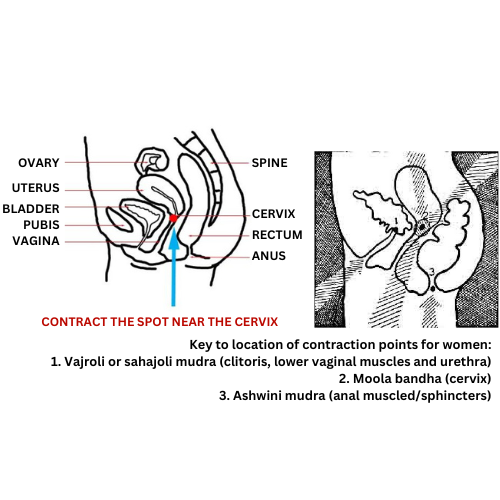
Mooladhara chakra does not have a kshetram. Often there is confusion between the three practices of moola bandha (used for awakening mooladhara chakra) and vajroli mudra and ashwini mudra (both used for awakening swadhisthana chakra). The following diagrams for male and female locations will help to clarify the difference in the points of contraction.